
No products in the cart.
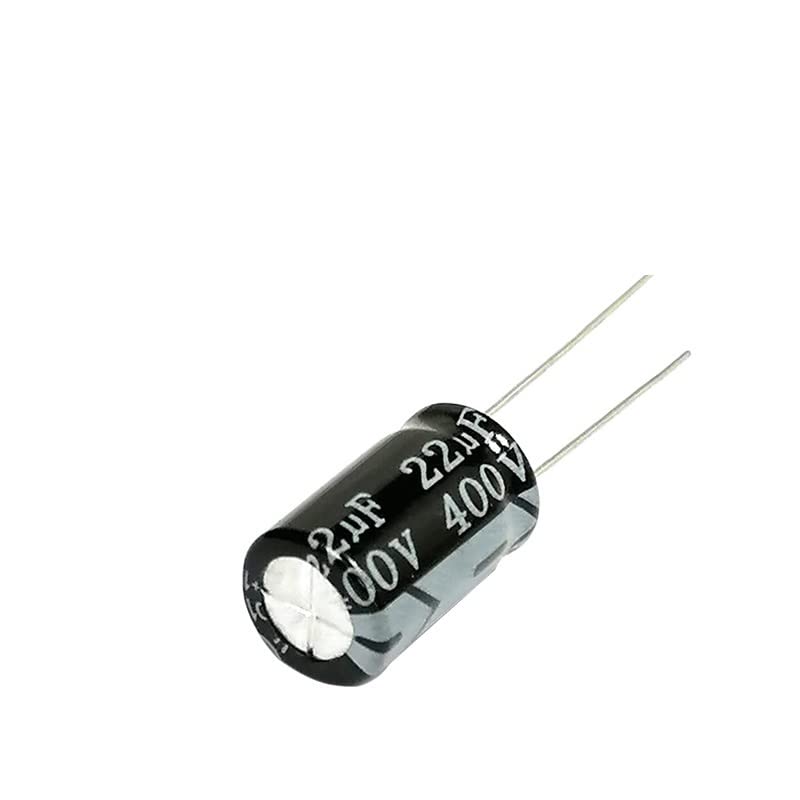
Electrolytic capacitor 22uF/400V
In Stock
1,000RWF
In Stock
The 22uF/400V electrolytic capacitor is a type of polarized capacitor used for energy storage and filtering in high voltage and high current circuits. It has a capacitance value of 22 microfarads and a voltage rating of 400V, which indicates the maximum voltage it can withstand before failure. It is commonly used in power supply and audio circuits and is characterized by a long lifespan, low ESR, and high capacitance. However, it must be connected with the correct polarity to function properly.
Description
An electrolytic capacitor with a value of 22uF (microfarads) and a voltage rating of 400V is a polarized capacitor that stores electrical energy in a dielectric material created through an electrolytic process. This type of capacitor is commonly used for energy storage and filtering in high voltage, high current power supply circuits, as well as in filtering and bypass applications in audio and other analog circuits. The 22uF value represents the amount of stored electrical energy, while the 400V rating indicates the maximum voltage the capacitor can withstand before it fails. Because electrolytic capacitors are polarized, they must be connected with the correct polarity to function properly.
Here are some of the specifications of the Electrolytic capacitor 22uF/400V:
- Capacitance: 22uF (microfarads)
- Voltage Rating: 400V
- Capacitance Tolerance: ±20% (typical)
- Leakage Current: Depends on the specific device, typically in the range of a few microamps
- ESR (Equivalent Series Resistance): Depends on the specific device, typically in the range of a few milliOhms
- Lifetime: Depends on the specific device and operating conditions, typically in the range of 2000 to 5000 hours
- Operating Temperature: Depends on the specific device, typically in the range of -40°C to +85°C
- Terminals: Radial leads or snap-in leads
- Size: Depends on the specific device, typically in the range of 6.3mm to 50mm in diameter
- Type: Aluminum Electrolytic Capacitor

Reviews
There are no reviews yet.