


Subtotal: 21,500RWF
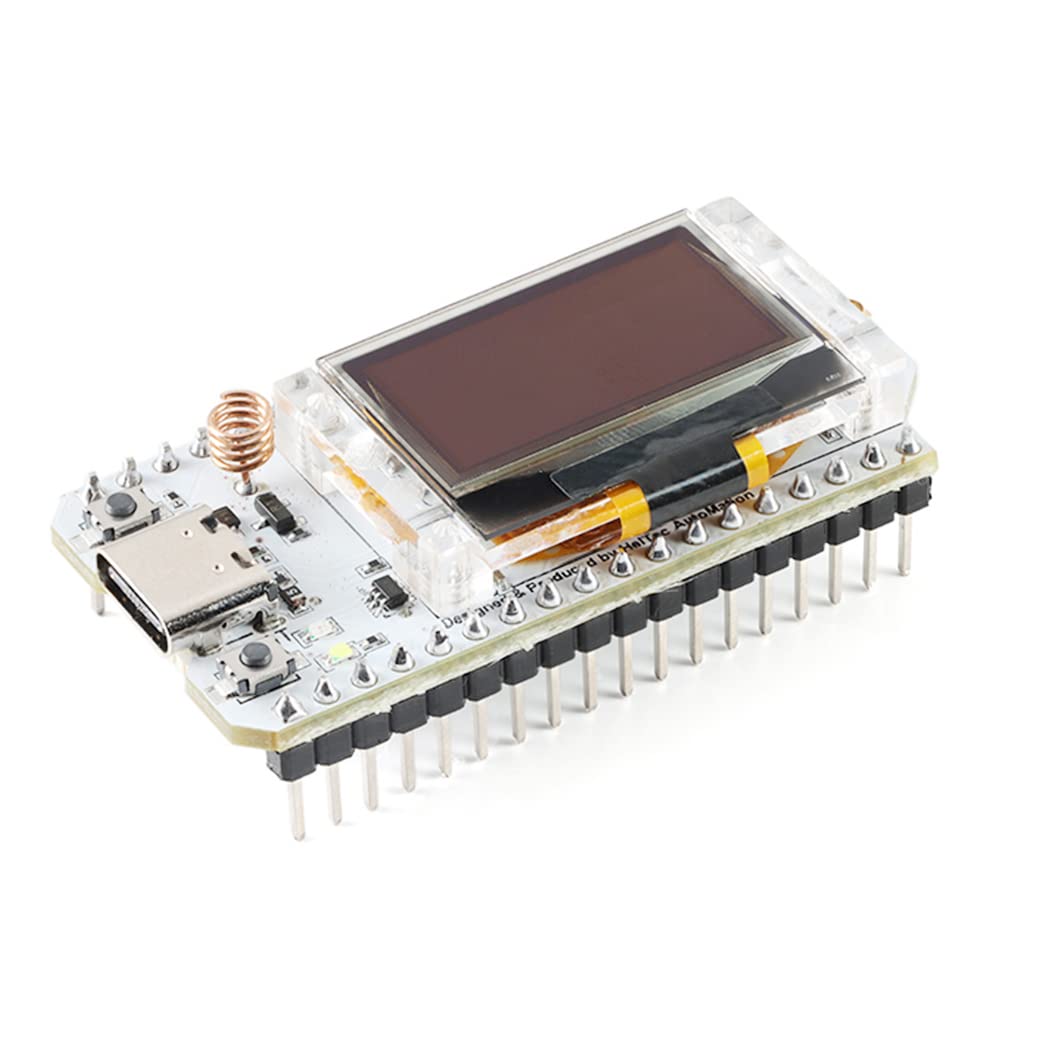
WIFI LORA SX1276 ESP32 DEVELOPMENT BOARD WITH OLED
In Stock
42,000RWF
In Stock
The WiFi ESP32s LoRa SX1276 (V3) Development Board is a compact microcontroller board featuring WiFi and LoRa communication capabilities, based on the ESP32 and SX1276 chips. It has 4 MB flash memory, 520 KB SRAM, 40 GPIO pins, and supports USB, UART, SPI, I2C, and I2S interfaces. The board also has a built-in antenna and optional external antenna support, and is designed for low-power operation. It is a versatile solution for IoT and other connected applications and can be programmed using the Arduino IDE or other tools.
Description
The WiFi ESP32s LoRa SX1276 (V3) Development Board is a compact, low-power microcontroller board equipped with WiFi and LoRa (Long Range) communication capabilities. It is based on the popular ESP32 microcontroller and the SX1276 radio transceiver, which supports the LoRaWAN protocol for long-range, low-power data transmission. The board also includes a built-in antenna and optional external antenna support for even greater range. With its powerful processing capabilities, support for a wide range of communication protocols, and low power consumption, the WiFi ESP32s LoRa SX1276 (V3) Development Board is a versatile and cost-effective solution for IoT (Internet of Things) and other connected applications.
Here are the specifications for the WiFi ESP32s LoRa SX1276 (V3) Development Board:
Processor:
- ESP32 microcontroller based on the Tensilica Xtensa LX6 architecture
Wireless Connectivity:
- 802.11 b/g/n Wi-Fi
- LoRa (Long Range) wireless communication using the SX1276 radio transceiver
Memory:
- 4 MB Flash
- 520 KB SRAM
Operating Voltage:
- 3.3V
Antenna:
- Built-in antenna
- External antenna support (u.FL connector)
I/O Interfaces:
- 40 General-Purpose Input/Output (GPIO) pins
- USB 2.0 for programming and power
- UART, SPI, I2C, and I2S interfaces
Power Consumption:
- Sleep current of less than 20 uA
- Deep sleep current of less than 10 uA
Dimensions:
- Approximately 5 x 3 cm
Operating Temperature:
- -40 to 85°C
This board is designed for development and testing purposes, and can be easily programmed using the Arduino Integrated Development Environment (IDE) or other popular programming tools.



Reviews
There are no reviews yet.